

EXPLORE
I BELIEVE. THEREFORE I AM.
dedicated to the 140th anniversary of the birth of Stasys Šalkauskis
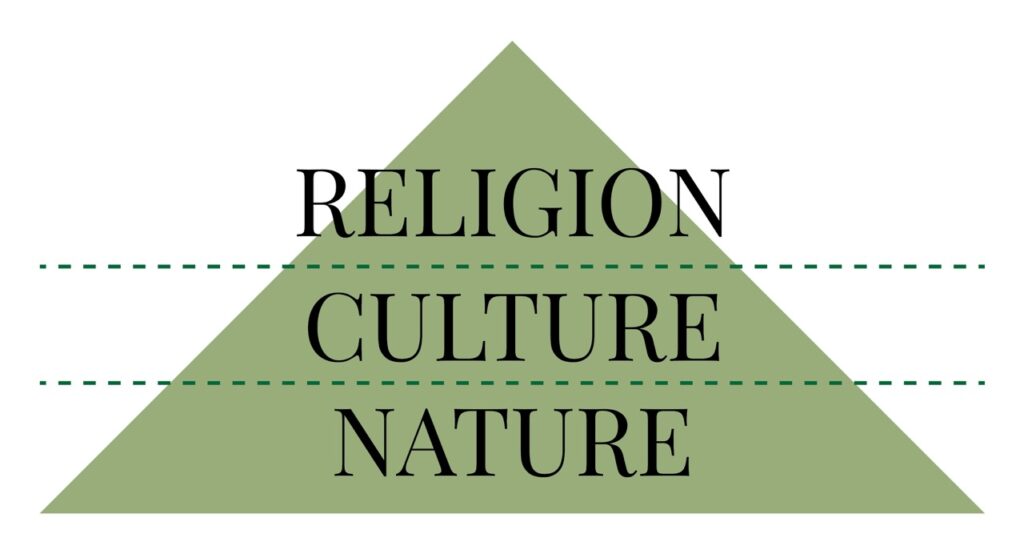
In his philosophy, Šalkauskis developed the idea of a hierarchical structure of life. According to this conception, human life rises from the material plane to the highest realm of the spirit. According to Šalkauskis, reality consists of the realms of nature, culture, and religion. In Šalkauskis’ view, the lowest and foundational level of life is nature and the human nature that belongs to it. The second level of the pyramid of life is culture, in which, through conscious activity, the human being uses the objects of their natural activity to achieve higher purposes. The third and highest level of the pyramid of life is religion, whose essence is the union of the human being with God. Religion makes accessible everything that is beyond the reach of culture.
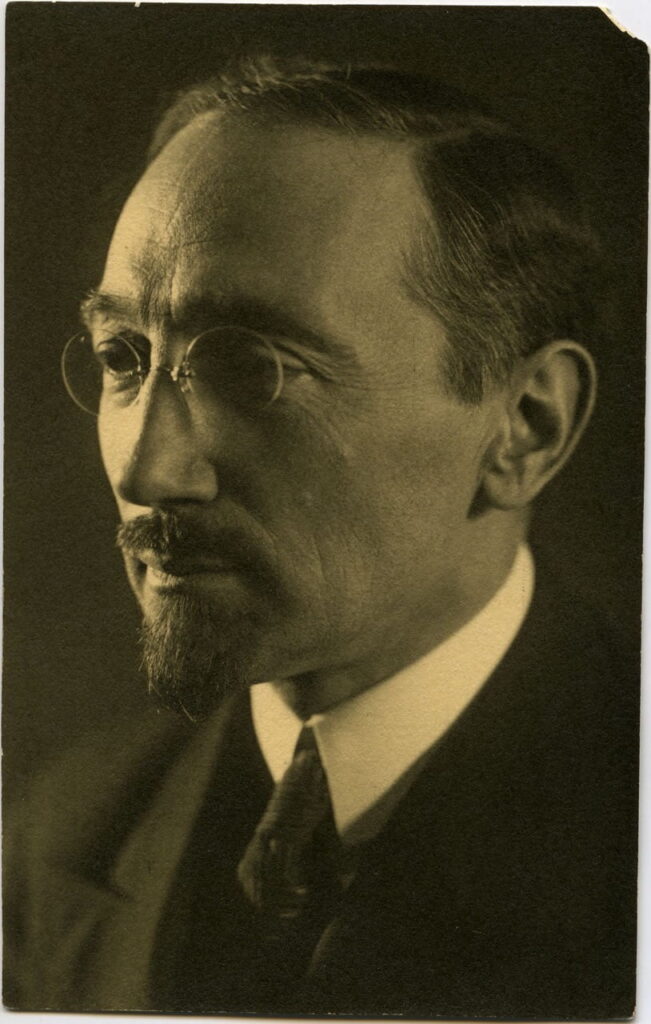
For Šalkauskis, culture in the broadest sense is closely bound up with the essence of the human being. Humanity itself is expressed precisely through cultural activity. However, cultural activity cannot fully achieve its goal, because human beings cannot completely free themselves from their nature, alter the laws of nature, or transcend the limits of causality. Therefore, for Šalkauskis, culture is not the highest sphere of life; religion is a far more important and the highest stage of human development and life.
Šalkauskis sought to unite Christianity and modern culture. According to the philosophers, this was a particularly difficult task to achieve.
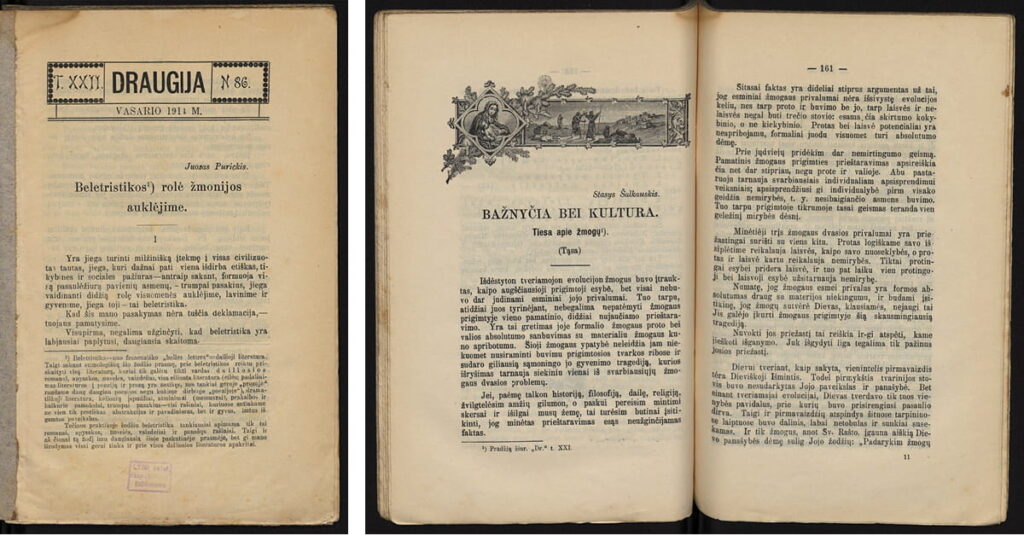
Šalkauskis first studied law and, after graduating from Moscow University, qualified as a lawyer. However, this work did not satisfy him. Thus, while working as a lawyer and living in Samarkand (Uzbekistan), he began writing philosophical texts for the Lithuanian press. His first philosophical texts were published in the Lithuanian magazine Draugija in 1914. These texts were reflections on the relationship between the Christian Church and culture.
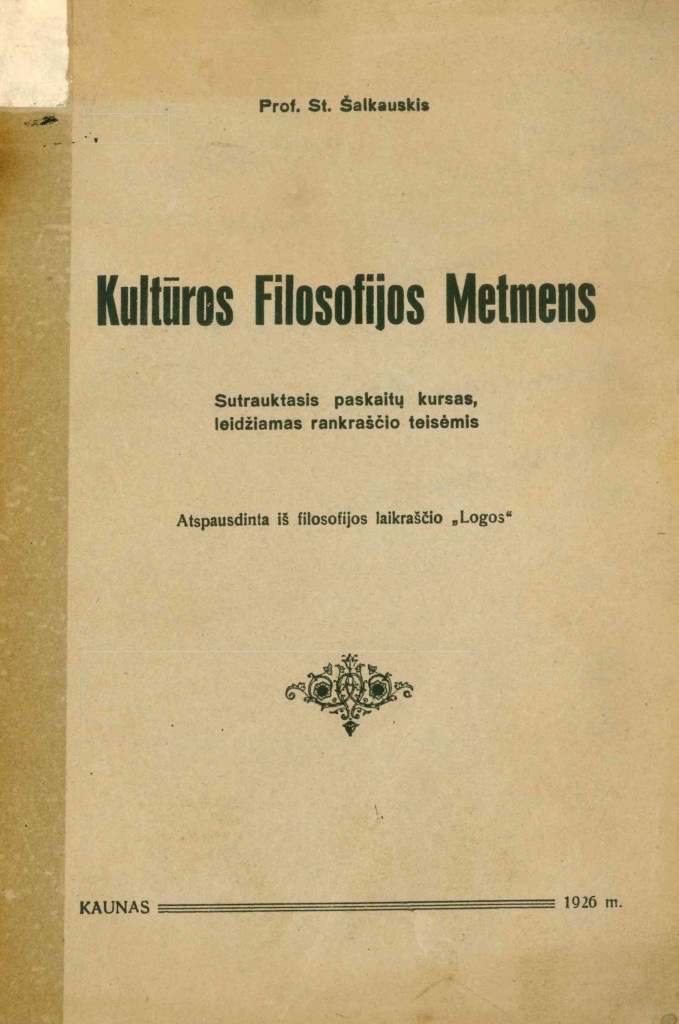
The philosophy of culture was the most fully developed discipline in Šalkauskis’ philosophy. Šalkauskis can be regarded as the founder and creator of the philosophy of culture in Lithuania. His philosophy of culture can be seen as a kind of modernisation programme for the Lithuanian nation. Šalkauskis spoke far-sightedly about Lithuania’s challenges and raised the questions: What is our place in Europe, and how can we create a culture that would be meaningful to humanity? According to Šalkauskis, the highest form of culture is universal culture: "A perfect work should unite the most universal content with the most individual form". Therefore, national culture should strive towards universal content.
“Culture raises the human being to such a level of consciousness, freedom and power that his self-determination becomes the most perfect in the human sense. Yet by the means of culture alone, humanity cannot attain the highest goals of its own self-determination, for their full realisation also requires the means of religion. Thus the purpose of culture ultimately has only a preparatory significance in relation to the purpose of religion. The deepest problems of culture therefore find their resolution in the sphere of religion.” – Stasys Šalkauskis
