SYMPOSIUM FILES
Maribor Regional Museum, Grajska ulica 2, Maribor, Slovenia


The international symposium MUSEOEUROPE 2025 is dedicated to Eduard Lind (1827–1904), a Hamburg-born artist who lived and worked in Maribor for nearly 50 years. In addition to numerous portraits of Maribor citizens, mayors, and distinguished townspeople, he also painted a series of sacred works, portraits of church dignitaries, landscapes, and cityscapes. Among them is the portrait of Prelate Augustinus Duda of the Benedictine Monastery of St. Paul in the Lavant Valley, painted in 1872, which will be on display at the Maribor Regional Museum during the symposium.

Guest museum: The Museum of the Benedictine Monastery of St. Paul in Lavanttal.
This museum houses one of the most important private collections in Austria, featuring exceptional works of applied art, prints, and paintings, as well as precious textiles and numismatic collections. A significant part of the collection is the monastery library, which contains over 180,000 valuable manuscripts and publications dating from the 5th to the 18th century. This year's thematic exhibition, titled "The Treasury of Carinthia – A Universe of Knowledge," presents rare objects from the early Middle Ages to the modern era, illustrating the rise and fall of various dynasties and the monastery's treasury, with masterpieces by renowned artists such as Dürer, Rubens, Rembrandt, and their contemporaries.
The international symposium is associated with the temporary exhibition MARIBOR PAINTER EDUARD LIND, on view at the Cinema Partizan exhibition space. Accompanied by a scientific monograph, the exhibition presents the life and work of the most significant portraitist in Maribor in the second half of the 19th century.
A symposium proceedings book, featuring scientific papers and abstracts from participants from five European countries, will be published in conjunction with the event.
According to records in the artist’s notebook, Lind spent 112 days working at the Benedictine Monastery of St. Paul in Lavanttal. During this time, he painted the portrait of the venerable Augustinus Duda and carried out restoration work. The authenticity of Lind's authorship is confirmed by the clearly visible signature and date on the back of the canvas. Augustinus Duda (b. 1827 – d. 1897) entered the Benedictine Monastery of St. Paul in 1847, took his vows on September 22, 1850, and was ordained a priest in Vienna on July 27, 1851. After completing theological studies in Klagenfurt and at the University of Vienna, he taught at the theological school in Klagenfurt from 1852. In 1866, he was elected abbot of the monastery. From 1871 until his death in 1897, he also served as the monastery librarian, systematically cataloging the extensive library, which contained nearly 30,000 volumes.
Benedictine Monastery of St Paul in the Labot Valley (Photo: dr. Gerfried Sitar)


Writing cabinet, by Jacob Arend, Johannes Wittalm, Servatius Arend, Würzburg, Germany,
1716, veneered with walnut wood, with marketery of tortoiseshell, rosewood, brass, pewter,
ivory and various woods, including snakewood, on a pine structure,
drawers lined with embossed gilt and colour-printed paper, lacquered fittings
brass, 180 x 165 x 78 cm. Victoria and Albert Museum (inv. no. W.23-1975).

At the symposium MUSEOEUROPE 2019 We expect papers on the development, characteristics and functions of dress culture in different prehistoric and historical periods, on the role and significance of dress culture and fashion, on the design, development, materials of clothing and textile technology, on the meaning of fashion as identity and its role in culture and fine arts. The experiences of experts involved in their conservation and exhibition will also be of interest.
The deadline for submitting a preliminary title and abstract of up to 600 characters without spaces is 09.12.2018.


Surka by Stank Vraz, 19th century, National Museum of Slovenia
Surka is a part of the men's costume worn draped over one shoulder for summer formal wear. In the period around 1848, the surka was considered a Slavic national garment; it echoed the costume of the former Styrian Illyrians and the Slavic enthusiasts of Young Slavia.
Stanko Vraz (1810-1851), real name Jakob Fras/Frass, was Slovenia-Croatian poet and one of the important members of the the Illyrian movement, its Slovenian pseudonym was Jakob Cerovčan, Slovenec from Slovenia, and the Illyrian pseudonym Stanko Vraz, Ilir from Great Illyria.
PHOTO:

Reminiscences of the past of European origins are based on trickery, kidnapping and rape "perpetrated" by the lust of the Greek gods. Medieval Europe takes us into a world of chivalry, of seduction and the development of omics, of the kiss of peace, of devotion and love and, last but not least, of faith and hope. Renaissance Europe is rooted in beauty of spirit and sensuality, the Enlightenment in reason, the bourgeois age and the modern age in the ideals of equality, freedom and solidarity.
Symbolically referring to the Renaissance adage of "scholarship that enjoys what is dying" and "art that calls back to the wind what has sunk into the shadows", Museoeurope is about the exchange of ideas and experiences, knowledge and heritage, revealing the diversity of Europe.

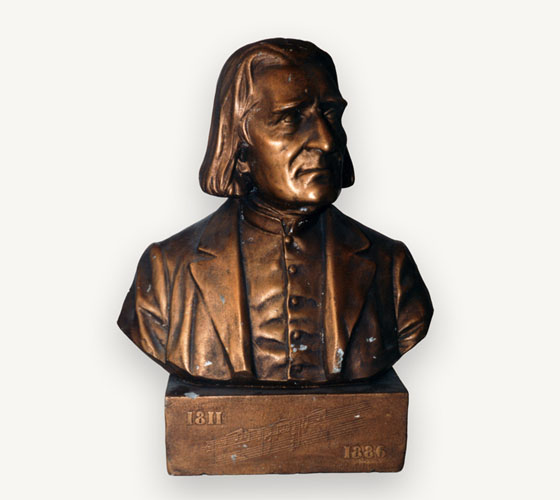
The Maribor Regional Museum invites you to participate in an international symposium on Europe in the time of Franz Liszt. The symposium is organised in honour of the 170th anniversary of Franz Liszt's playing in the Knights' Hall of Maribor Castle, and will take place in Maribor from 13 to 15 October 2016.
The symposium will feature papers on the cultural life of the 19th century, so strongly marked by theatre and music, the emergence of media and modern marketing, urbanisation, the discovery of new lands, industrial and technological progress, the world of women and men, and the child prodigy in art.
The contributions will be grouped into four tracks:
Further information can be obtained by contacting museoeurope@museum-mb.si or by calling +386 (0)2 228 35 51.
Franz Liszt, Little European Tour
The exhibition Franz Liszt, Little European Tour highlights Liszt's musical tour in 1846, when he gave concerts in Graz, Maribor, Rogaška Slatina and Zagreb. For the first time, the exhibition will present the extensive collection of musical instruments of the Regional Museum Maribor, which will be supplemented with objects from the visiting institutions. The exhibition will present themes related to the cultural history of Styria, with an emphasis on the musical development and creation in Styria.

The starting point for the discussions is the invasions of the Ottoman army into our lands and their consequences, which are reflected in architecture, fine arts, way of life, etc. The contributions should be written in English and will be published in an electronic publication.
A meeting of two worlds
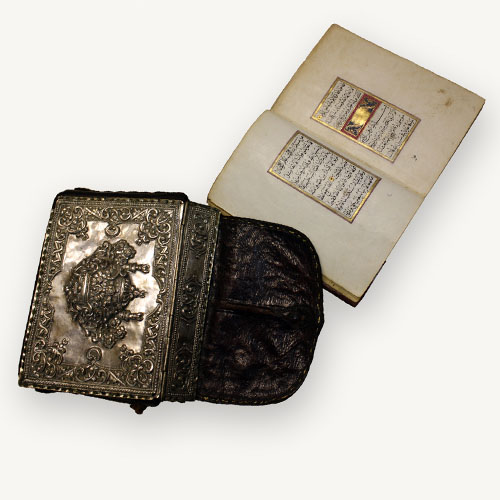
With the exhibition Encounters of Two Worlds, the Maribor Regional Museum juxtaposes the ambience of the castle's Knights' Hall, which is decorated with ceiling paintings depicting scenes of battles with the Ottoman Turks, with an exhibition of Ottoman Empire artefacts from three visiting institutions from Sarajevo.

The main guest object, which complements the permanent exhibition of the Maribor Regional Museum's wheelwright's craft, is from the Romanian Peasant Museum in Bucharest and is part of a 20th century wagon. It was used by the inhabitants of the village of Obîrsia in the Hunedoara province, a large part of the multicultural region of Transylvania.
The wheel is an integral part of the chariot. The hub is made of oak wood and surrounded by two metal circles. The wheel has 12 spokes (11 are made of ash wood and one of acacia wood) and six parts of the ring are made of ash wood. On the outside of the wooden ring is a metal ring, one centimetre thick, which is reinforced with rivets. This ring was designed to make the wheel resistant to impact or deformation.

Use value of a wooden wheel
With the exhibition The Use Value of the Wooden Wheel, the Maribor Regional Museum highlights one of the oldest crafts. The wheelwright's craft is one of the most important industries. It is closely linked to the manufacture of the first means of transport, which were used mainly in trade and agriculture. From its beginnings with the axle wheel 5 200 years ago until today, the wheelwright's craft has played an important role in the development of the wheel and thus its function in technological progress.
The main guest object, which complements the permanent exhibition of the Maribor Regional Museum's wheelwright's craft, is from the Romanian Peasant Museum in Bucharest and is part of a 20th century wagon. It was used by the inhabitants of the village of Obîrsia in the Hunedoara province, a large part of the multicultural region of Transylvania.

The Maribor Regional Museum invites you to a series of lectures by local and international experts in the framework of the European Capital of Culture - Maribor 2012. The lectures are related to the guest objects in the exhibition. Among the lecturers, we are expecting guests from Austria, Germany, the Vatican, Poland, Croatia and Slovenia.
Further information can be obtained by contacting oskar.habjanic@maribor.si or by calling +386 (0)2 228 35 51.

UNIFORM OF THE PAPAL SWISS GUARD
The uniform of the Papal Swiss Guard takes us back to the time of the Counts of Brandis and Pope Pius VI, who stayed overnight in Maribor Castle in 1782. The Pope must have been accompanied by members of the Swiss Guard, who guarded him on his journey between the Vatican and Vienna. The first Guardsmen are mentioned as early as the 16th century, and the uniform on display was codified in 1914 by Jules Repond, then commander of the Swiss Guards.

STATUES OF THE STRAUB BROTHERS
The Straub family of sculptors is one of the most important artistic families in Central Europe in the 18th century. They were originally from Wiesensteig in Württemberg, Germany. The sculptural activity of his father, John George Straub (1674-1755), was continued by his five sons: John the Baptist (1704-1755), who worked as a court sculptor in Munich, Philip Jacob (1706-1774), a court sculptor in Graz, Joseph (1712-1756), a sculptor in Maribor, John George (1721-1773), a sculptor in Radgona, and Franz Adam (1726 - before 1771), a sculptor in Zagreb.

TABLE OF PRINCE WIŚNIOWIECKI AND PRINCESS RADZIWIŁŁ
The table with the arms of the Radziwiłł and Wiśniowiecki families was created during the reign of the Wettin dynasty, during the Polish-Lithuanian Commonwealth, one of the largest states in Europe at that time. It was made for Michał Serwacy Wiśniowiecki and his wife, Tekla Róża, née Radziwiłł. The coat-of-arms motifs show the love affair and the splendour of the family and their pride in their noble title.
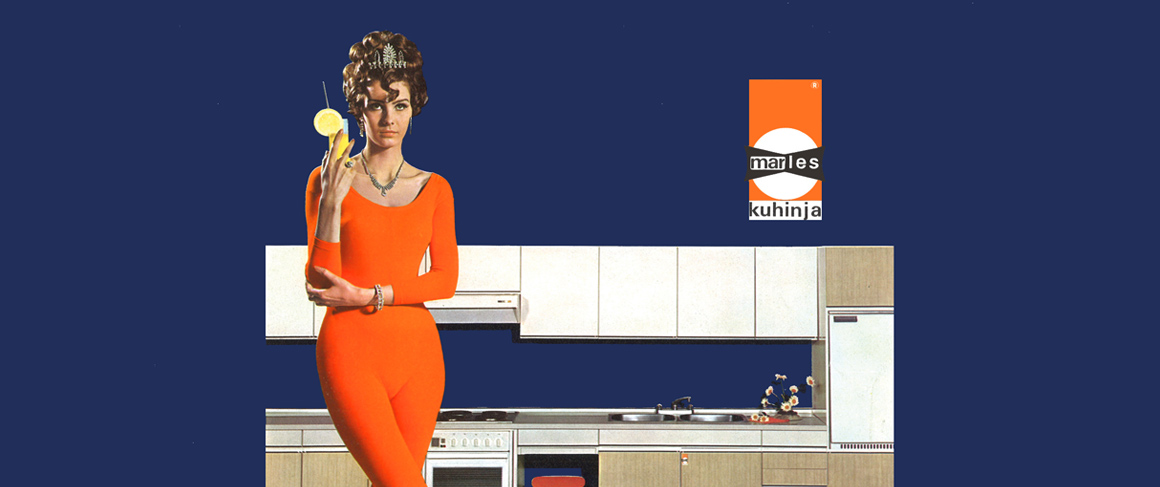
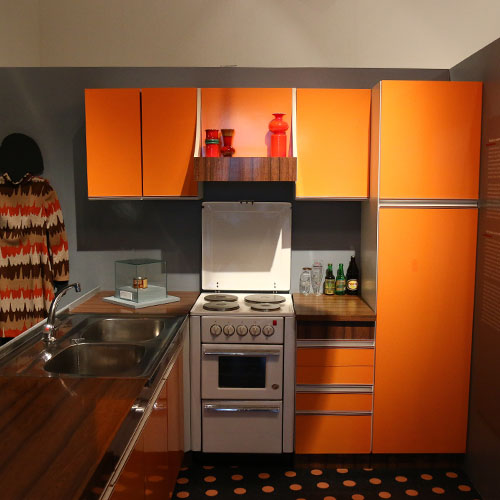
From 2020, the furniture collection of the Maribor Regional Museum will be on display in a new permanent exhibition called Spaces of Beauty. The concept of the exhibition is based on four spaces. Each of them presents selected pieces of furniture from different periods, treated with different decorative techniques. The basic techniques of decorating wooden furniture have been in use since the time of ancient civilisations, and their development has been prompted each time by the need for a new message.
The exhibition, with the many interesting facts that the artist offers alongside the objects, expands the space of reflection beyond the furniture itself, beyond the buildings for which it was made, beyond the ambitions of the rulers, the nobility, the bourgeoisie and the church, beyond the talent of the designers and the constraints of time, to visions of our common future. It poses the question whether, today, when technology makes it possible to realize every idea, we are able to seriously reflect on what beauty is.