dedicated to the 140th anniversary of the birth of Stasys Šalkauskis
Stasys Šalkauskis in the Whirlwind of Public Life
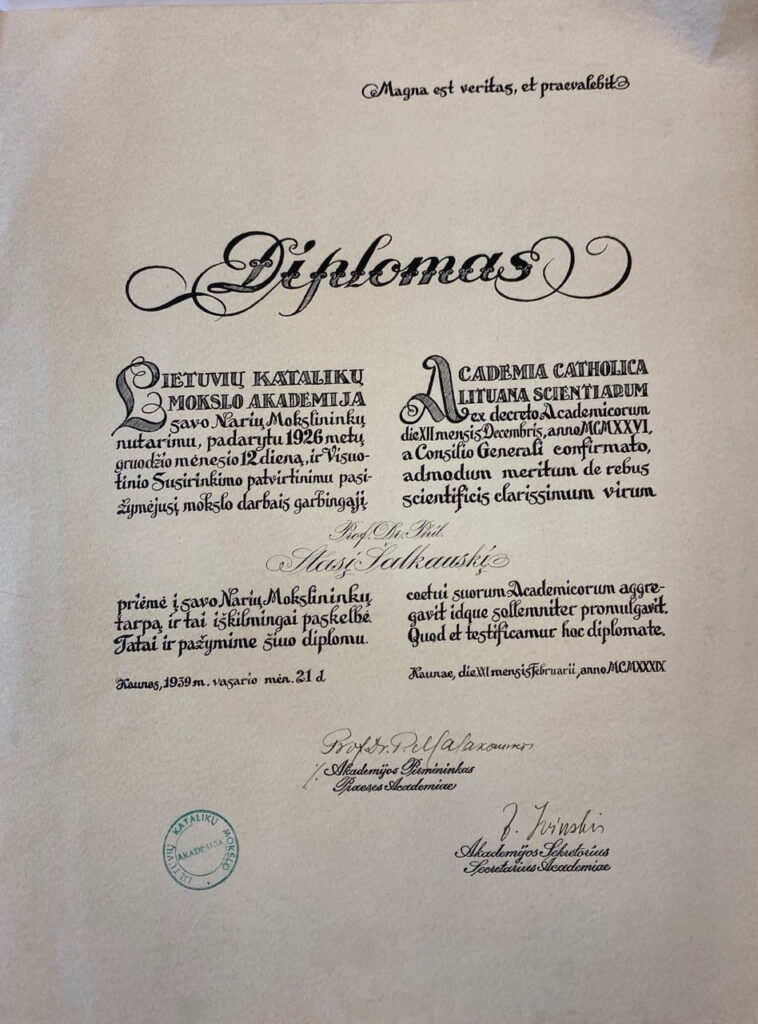
Diploma of the Lithuanian Catholic Academy of Science admitting Šalkauskis "to the ranks of its scholar members". 1939. Vilnius University Library.
Stasys Šalkauskis was one of the founders and a member of the Lithuanian Catholic Academy of Science, serving as its chairman from 1938 to 1940. This public organisation was established in 1922. It was significant for bringing together Catholic scholars from various fields in Lithuania, organising a range of academic activities, holding conferences, publishing works, as well as researched and assessed the social life of the time. Membership in this organisation meant being an active participant in public life. During the years of Soviet occupation in Lithuania, the organisation continued its activities in Italy and other countries. In 1990, following the restoration of Lithuania’s independence, it returned to Lithuania, where it continues to operate to this day.
As early as 1933, at the first congress of the Lithuanian Catholic Academy of Science, Šalkauskis was appointed an academician. This was a great distinction, as during the interwar period, in less than two decades of the Academy’s activities, only ten people were appointed academicians. This title was awarded only to members who had made exceptional contributions to the organisation.
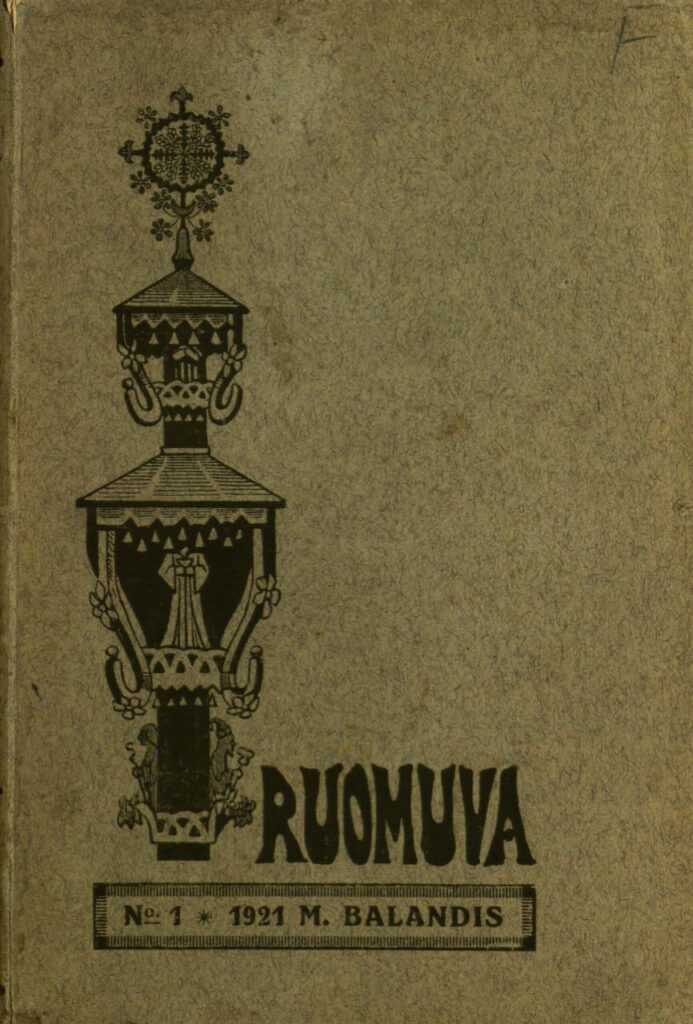
The journal Ruomuva. 1921. Šiauliai "Aušros" museum.
In 1921, Šalkauskis founded the cultural journal Romuva, which sought to bring together Catholic-minded intellectuals, Lithuanian patriots, and public figures. Already in the first issue, Šalkauskis formulated the principles of the Romuva society, which he planned to establish. Unfortunately, only two issues of the journal were published. The idea did not receive much public support at the time. Šalkauskis therefore turned his attention and energy to the Ateitininkai organisation.
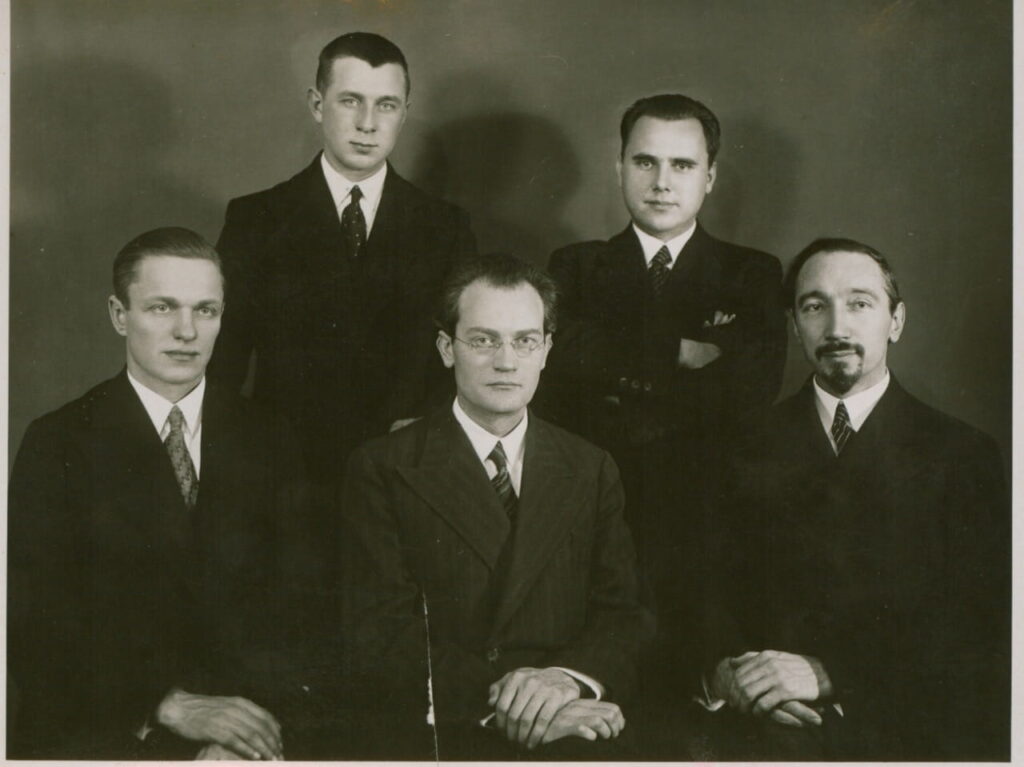
Stasys Šalkauskis (seated first from the right) with contributors to the journal Židinys. 1932.
Seated from the left: Pranas Mantvydas, Vincas Mykolaitis-Putinas, Stasys Šalkauskis. Standing from the left: Aleksandras Žirgulys, Steponas Zobarskas. Photographer unknown. Maironis Lithuanian Literature Museum.
Stasys Šalkauskis also contributed to Židinys, a journal devoted to literature, scholarship, public affairs, and academic life, serving as its editor from 1932 to 1934. The journal published articles on history, culture, literature, science, and other topics. It reflected a Christian worldview.
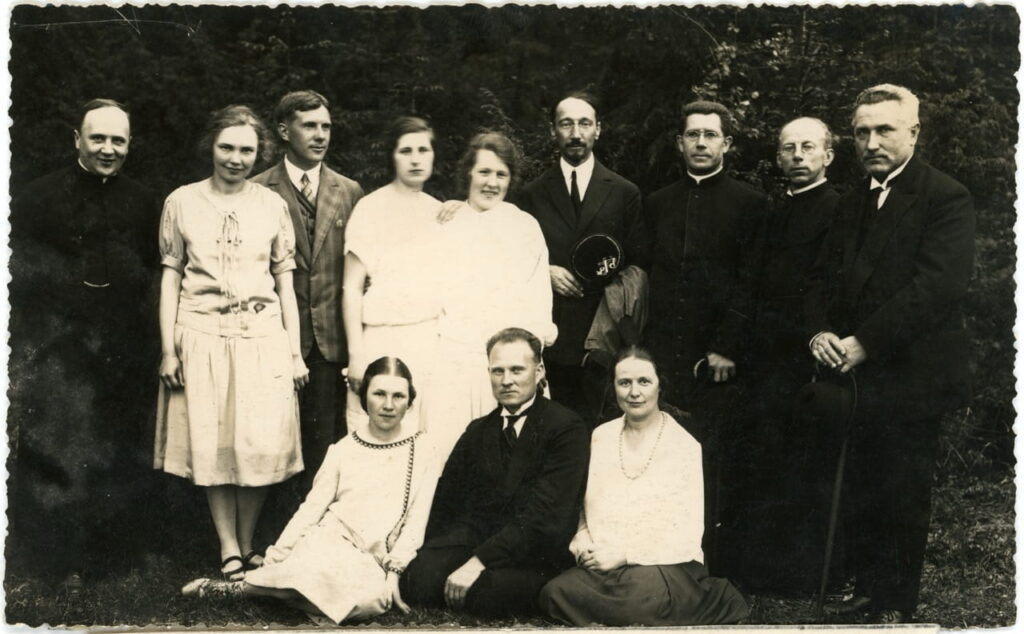
Šalkauskis family with like-minded people. 4th decade of the 20th century.
Standing from the left: fifth – Julija Šalkauskienė, sixth – Stasys Šalkauskis, seventh – priest Mečislovas Reinys, ninth – priest Juozas Vailokaitis. Photographer unknown. Šiauliai "Aušros" museum.
The life of the state was very important to Stasys Šalkauskis. In his philosophical writings, publicistic texts and correspondence one finds a strong emphasis on the importance of democracy and concern for the fate of Lithuania as a state. He did not belong to any political party himself, but closely followed the country’s affairs and voiced criticism of the Lithuanian government in the 3rd–4th decades of the 20th century as it moved towards authoritarianism. Acting out of civic responsibility, remaining faithful to his ideas, and seeing that the situation in the state did not correspond to them, he wrote letters to President Antanas Smetona in 1927 and again in 1935, setting out his views: "In the life of a state and a nation there are moments when one cannot remain silent while observing what is happening around. Such a moment has now come for my conscience..." His reflections on the dangers of an authoritarian regime that paralyses the development of civil society proved to be remarkably far-sighted.
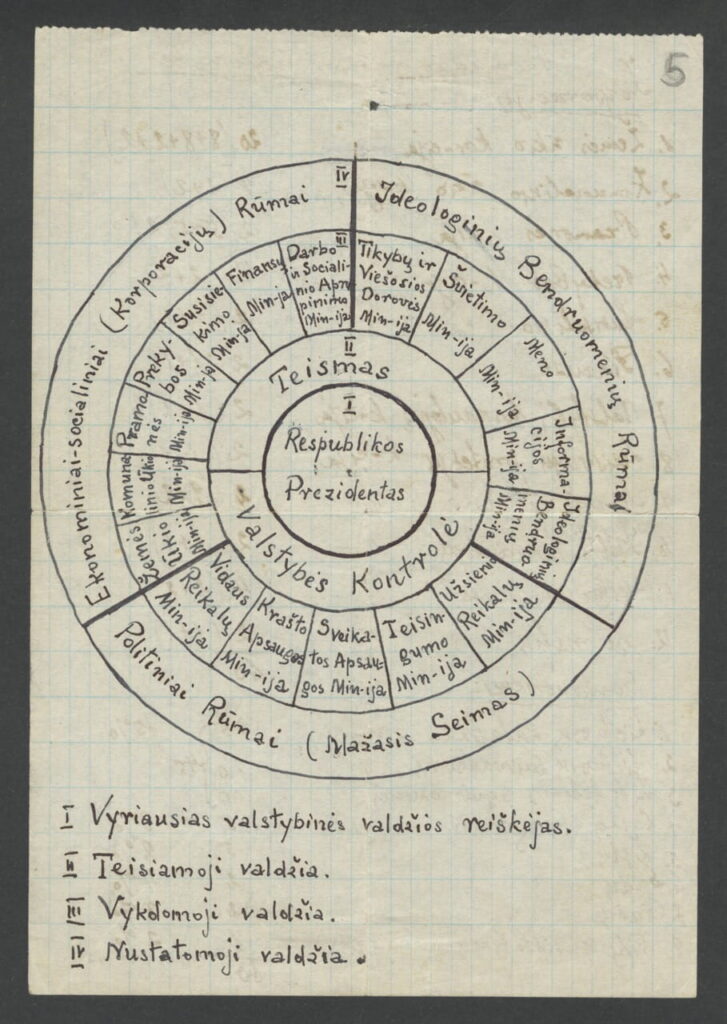
State governance scheme prepared by Stasys Šalkauskis, illustrating the concept of complete democracy. 4th decade of the 20th century. Vilnius University Library.
Šalkauskis analysed Lithuania’s political situation and outlined a plan for a new political system, which he called Complete Democracy. It is a model of government designed to help establish a complete democracy. It presents ideas for a form of democracy that would enable an organic union between the state and society. The proposal distinguishes four branches of state authority: the highest representative of state authority (the President); the judicial authority (the State Control Office and the Courts); the executive authority (the Cabinet of Ministers and ministries); and the determining authority (the Great Seimas, the Political Chamber or Small Seimas, the Chamber of Corporations, and the Chamber of Ideological Communities).
Šalkauskis intended to prepare a work on political philosophy and had even drawn up an outline for it. However, these plans remained unfinished, and the manuscripts he had begun were lost amid the turmoil of the Second World War.