Dedicated to the 140th anniversary of S. Šalkauskis’s birth.
Educator of Lithuanian Youth
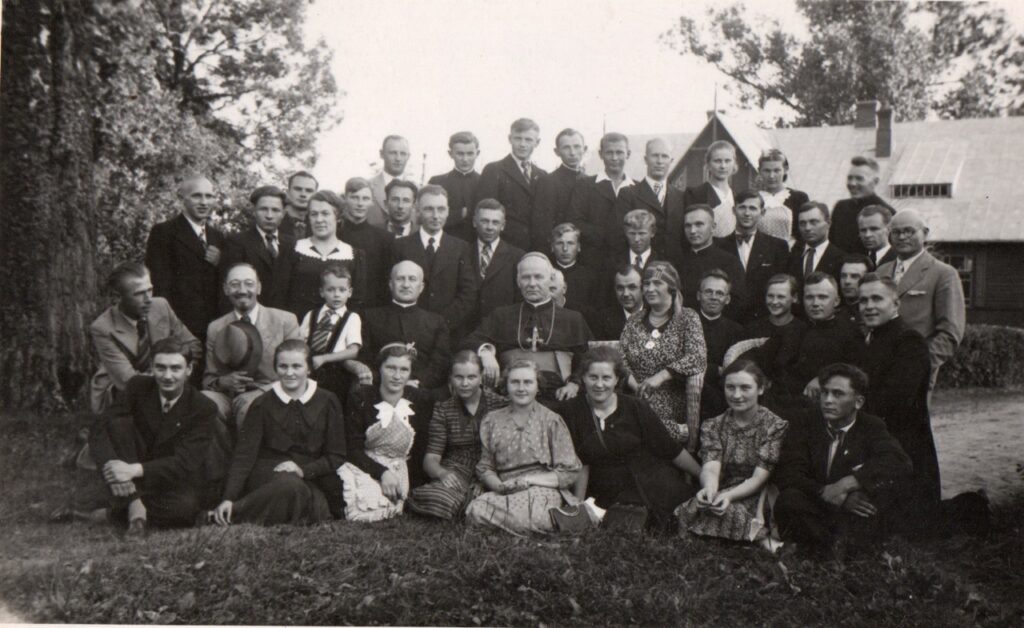
Stasys Šalkauskis (second row, second from the left) with members of the Catholic youth organisation – the Ateitininkai Federation. Ca. 1936–1938.
Beside Stasys Šalkauskis is his son Julius; his wife, Julija Šalkauskienė, is standing in the third row, third from the left. Photographer unknown. Šalkauskis family archive.
Stasys Šalkauskis saw the purpose of his life in "national education through philosophy." Thus, he began developing a universal Lithuanian system of pedagogy. According to Šalkauskis, the scope of pedagogy is very broad – it encompasses not only the development of the individual, but also various aspects of the education of groups, nations, and society, while one of the foundations of pedagogy is the understanding of the human being, the nation, and society. In developing a philosophy of national education, he combined modern historicism with Christian metaphysics.
Šalkauskis also compiled a dictionary of Lithuanian pedagogical terminology, collecting more than 1,600 terms, but did not have time to complete the work.
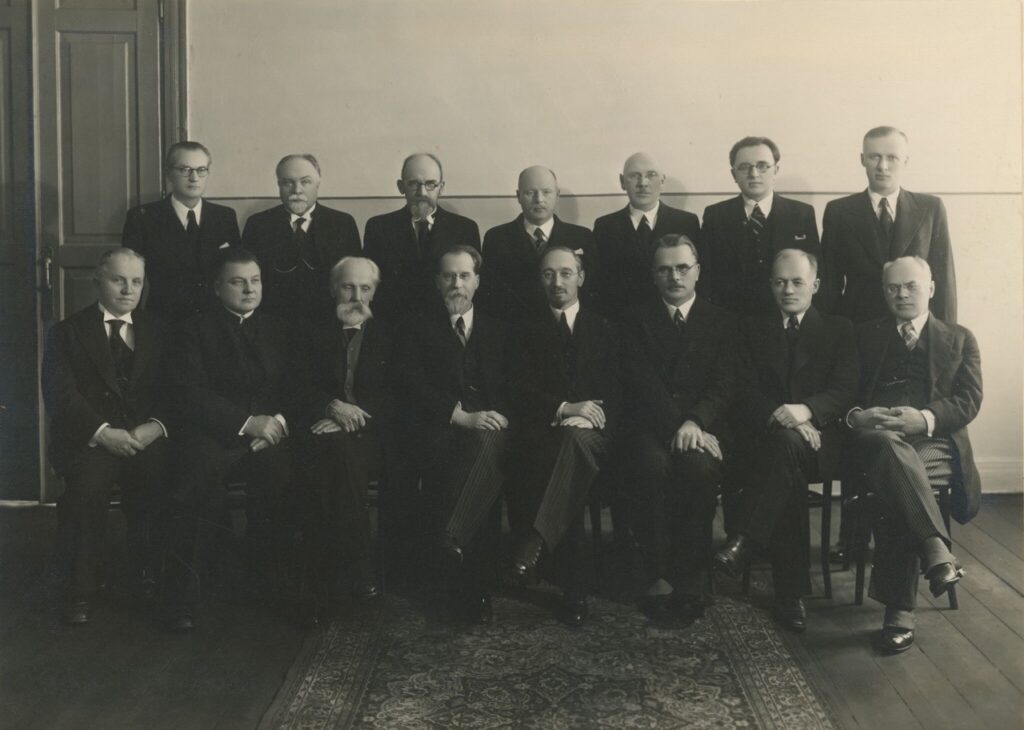
Scholars of Vytautas Magnus University and Vilnius University. Rector Stasys Šalkauskis is seated in the first row, fifth from the left. 16 February 1940.
Seated from the left: Kazimieras Vasiliauskas, Blažiejus Čėsnys, Pranas Jodelė, Mykolas Biržiška, Stasys Šalkauskis, Petras Šalčius, Antanas Purėnas, Augustinas Janulaitis; second row: Vincas Mykolaitis-Putinas, Pranas Mažylis, Vaclovas Biržiška, Zigmas Žemaitis, Vladas Lašas, Zenonas Ivinskis, Petras Katilius. Photographer: Boleslovas Savsenavičius. Lithuanian Museum of Education.
Stasys Šalkauskis fulfilled his mission as an educator of the nation by teaching at the University of Lithuania (from 1930, Vytautas Magnus University). Šalkauskis was a professor in the Faculty of Theology and Philosophy at the university, headed the Department of Pedagogy, and taught courses in philosophy and pedagogy. He was extremely popular among students and sought to pass on his knowledge to them and shape their understanding of the world. Šalkauskis had great authority among his fellow scholars. On 4 June 1939, he was elected Rector of Vytautas Magnus University. Unfortunately, he was destined to be the university’s last rector, as the Soviet Union occupied Lithuania as early as June 1940.
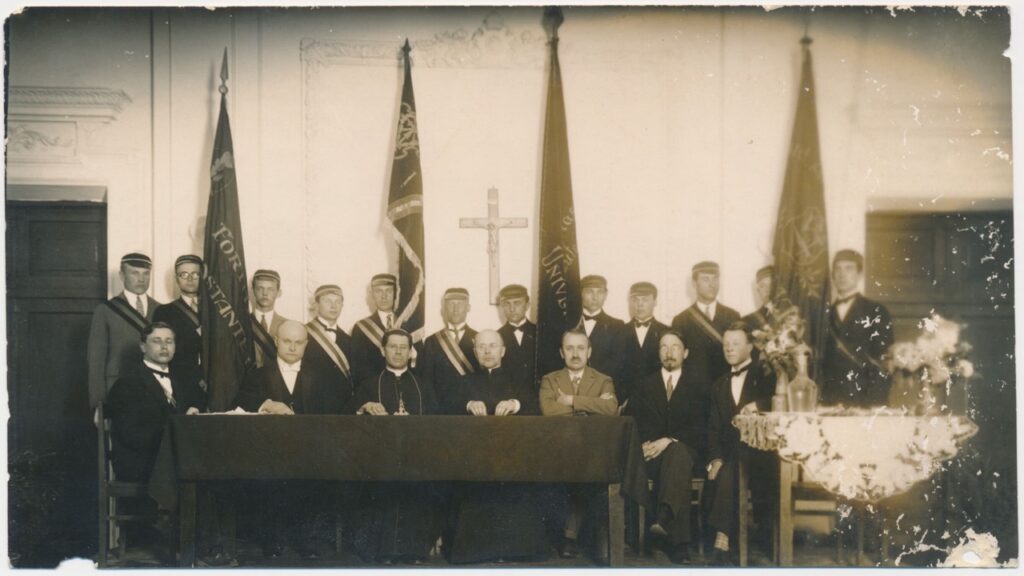
Stasys Šalkauskis (seated second from the right) among members of the Ateitininkai organisation.
Seated at the table from the left: third – Bishop Mečislovas Reinys, fourth – Pranas Kuraitis, fifth – Pranas Dovydaitis, sixth – Stasys Šalkauskis. Photographer unknown. Kaunas City Museum.
Stasys Šalkauskis was an active member of the Lithuanian Ateitininkai Federation and served as its Supreme Leader from 1927 to 1930. The Ateitininkai Federation is a Catholic Lithuanian youth organisation founded in 1911. It is one of the largest and longest-running youth organisations in Lithuania, bringing together school students, university students, and graduates. Its members also maintain links with international Christian organisations.
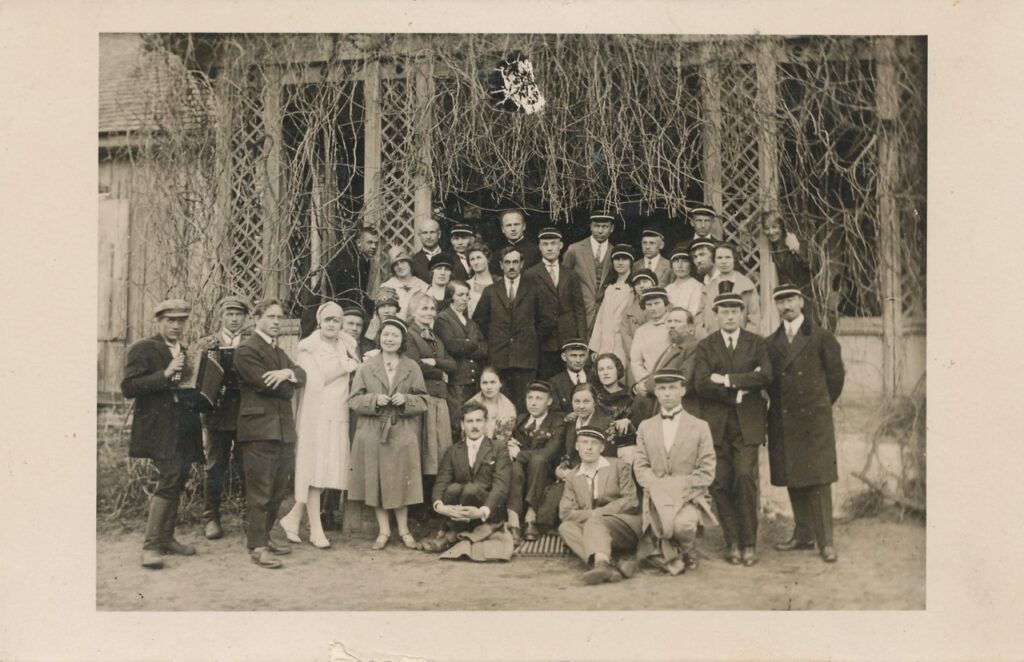
Stasys Šalkauskis (standing in the second row, first from the right) at a gathering of the student Ateitininkai society. 1926.
Seated in the centre of the first row is Juozas Eretas. In the second row, second from the right, stands Vincas Mykolaitis-Putinas. Photographer unknown. Maironis Lithuanian Literature Museum.
Šalkauskis put his philosophy of national education into practice by developing the ideology of the Lithuanian Ateitininkai Federation. As a member and leader of the organisation, he formulated its fundamental principles and directions of activity, and in 1933 wrote the book Ateitininkų ideologija (The Ideology of the Ateitininkai). According to this work, an Ateitininkas was expected to be not only a devout Catholic and a patriot, but also open to universal, global culture. For Šalkauskis, the physical and spiritual aspects of human nature needed to be united into a complete, harmonious, and creative personality guided by ideals. He was convinced that the Ateitininkai were part of the nation’s elite.
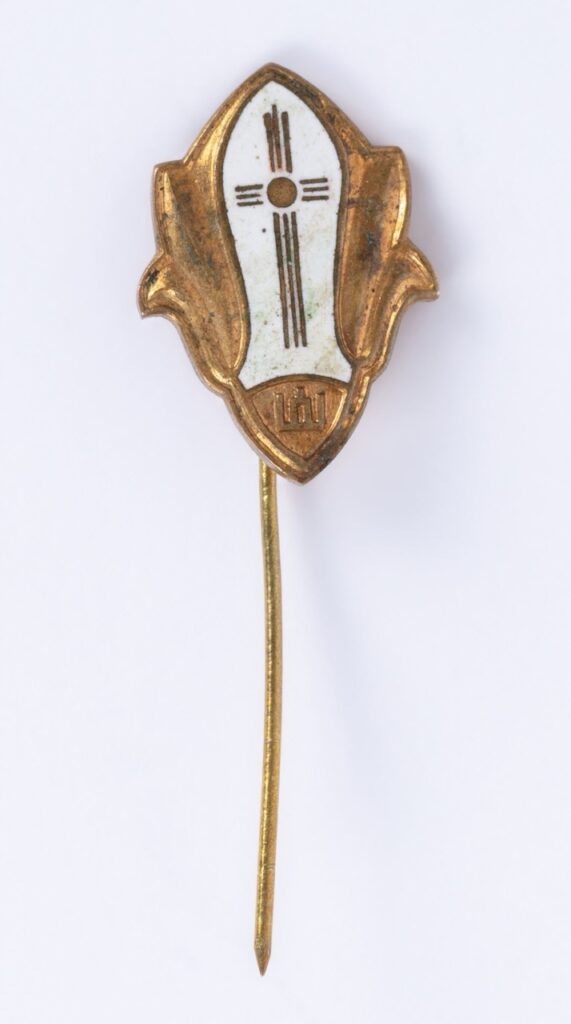
Stasys Šalkauskis’ Lithuanian Ateitininkai Federation badge. 3rd–4th decades of the 20th century. Šiauliai "Aušros" museum.
The Šalkauskis family preserved Stasys Šalkauskis’ Lithuanian Ateitininkai Federation badge, which he regularly wore on the lapel of his jacket. The badge is tulip-shaped, symbolizing spiritual youth. The tulip’s five petals represent the five principles of the Ateitininkai. The cross in the centre symbolizes the three theological virtues: faith, hope, and love, and, together, Christianity. A sun is incorporated into the centre of the cross, symbolizing the light of faith. In the lower part of the badge, a semicircle symbolizing the world can be seen, and beneath it are the Columns of Gediminas, representing Lithuania.